

Anna Morley is a classically trained vibraphone player from Australia, now living in Barcelona, and she’s quietly making a stir with her unique compositions. Morley works with London-based produced Alex Foster who adds gentle rhythms and heart-beat sized beats to her instrumentation. Along with the vibraphone, Morley occasionally adds her own vocals to tracks and plays the violin, keyboard, and an array of percussive instruments.
Her EP Character (from where these downloads originate) is a chilled-out ambient work and her debut album Red Balance (out today—stream it below) is equally crisp and clean, while a bit more bubbly, a refreshing soda pop on a summer day. Space-age bachelorette pad music at its finest. Although I think anyone, regardless of their marital status, will enjoy lounging to such a soundtrack.
If you’re fortunate enough to find yourself in Spain in the next couple weeks, be sure to check out her shows.
Es Lo Que Hay from Character (2009)
Today the Heart from Character (2009)
www.annamorley.com

 Ghost Lights make perfect music to fall asleep to. And I mean that in the best possible way and not because I’m in bed snuggled up to my laptop. The subdued yet lush instrumentation hits you like a muscle relaxant and you’re off to dreamland. The effect isn’t accidental. The artist behind Ghost Lights, Noah Cebuliak, disappeared into Canada’s wilderness and discovered emotions that can’t be transmitted by mere words or waking logic. Who is the Canadian equivalent of Thoreau? I nominate Cebuliak (Canada’s answer to Neil Halstead at least). He went into the woods, with a guitar, to see if he could learn what it had to teach. These songs are his lessons learned and the only way you’re gonna benefit from them is by checking out of the rat race, unplugging, and letting yourself drift toward the lights, the Ghost Lights…
 With muffled vocals in minor keys, purposeful feedback, and dominating drums Valleys eerie folk sound resembles a bizarre nightmare.
  This song may not have even won my attention during a recent listening binge if my nose hadn’t been buried in a particular book. “Bastard Out of Carolina” by Dorothy Allison is that particularity. An insightful young lady, Ruth Anne “Bone” Boatwright narrates the novel, telling the story of growing up poor in the South amongst a colorful cast of aunts and uncles. The rhythm of the language is pure music, while Ruth Anne’s life is pure hell. Besides a couple aunts who come to her rescue, the closest thing that brings solace to Ruth Anne’s life is gospel music. Julie Peel doesn’t play gospel music in the traditional sense, but her soulful voice, and the deep strains of cello echo the yearnings of one searching for some sort of salvation. I assume Peel’s song “Unfold” is about the loss of a lover, but its lyrics and theme resonate acutely with Ruth Anne’s loss of motherly love. Even though that book and this song are filled with grief, discovering them together has been a pleasant harmonic convergence.
 I first encountered Miles Tilmann on the compilation “Six Records Breaks Your Heart Again” (in truth it was the first and last time the label would break your heart, because it was their first release and they haven’t released anything since) and a recent revisit to the album sent me searching around for facts and tunes from some of the artists. Miles Tilmann, pleasantly surprised me by offering up close to 100 MP3s on his site. Tilmann produces a variety of ambient tracks, but the ones I chose to highlight here are more beat driven. Tilmann’s music is awash in fluid synths, deep kick drum pulsations, and well, plenty of ambient sounds. You’ll discover similarities to Boards of Canada and Aphex Twin. Tilmann has been steadily releasing music since 1999 on labels like Sub:marine, Consumers Research & Development, and Toytronic. For his latest effort
 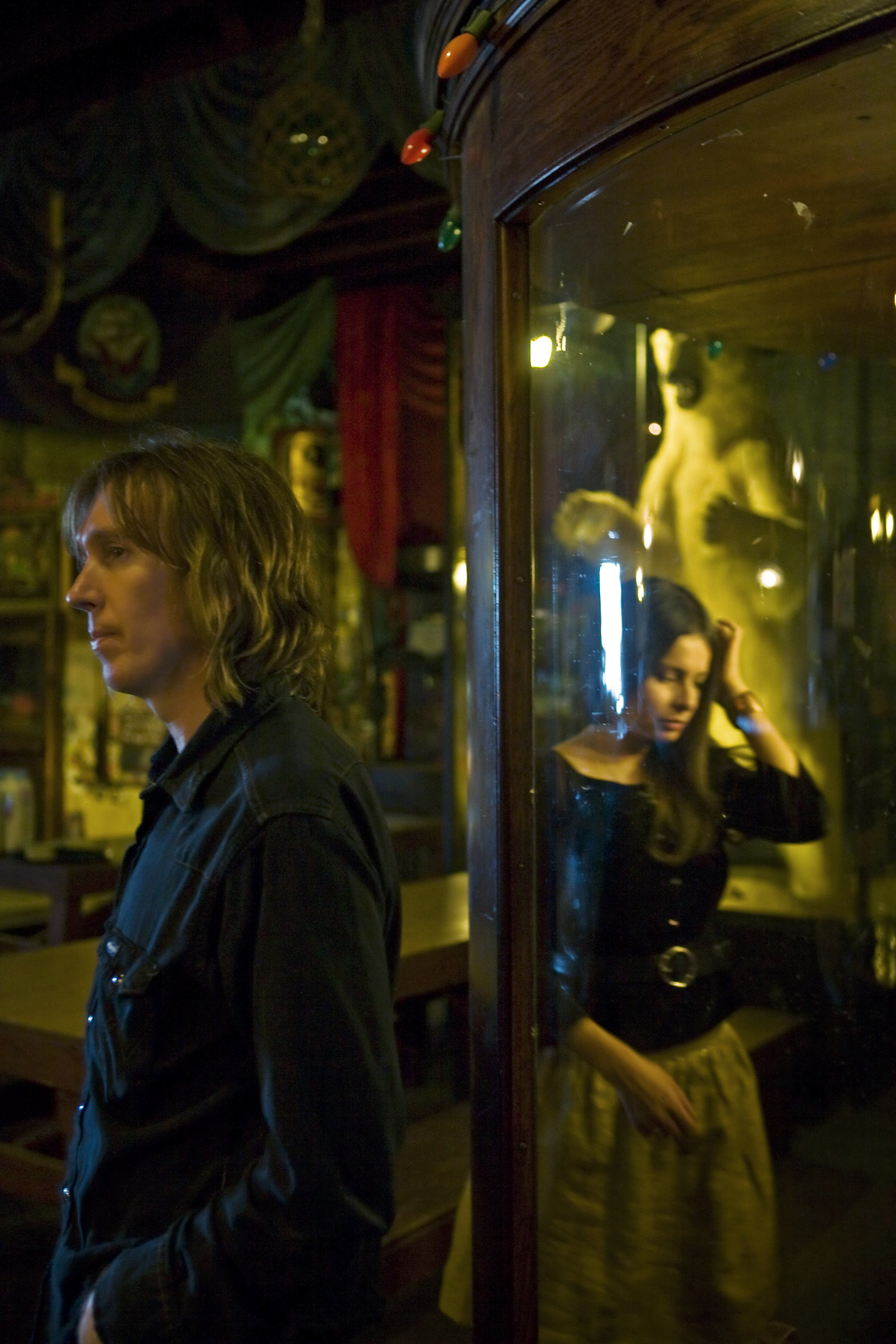 I’m not gonna lie. Hope Sandoval makes me feel old. I can’t believe it’s been 19 years since the first Mazzy Star album. What makes it seem even longer are the eight years that have passed since Sandoval’s last album. Sure, she’s sang on other records here and there, but one-offs are never enough. Once again she teams up with Colm Ó Cíosóig, who admits he holds back on his work with Sandoval, and that the music exists on “the opposite ends of the spectrum” as compared to My Bloody Valentine, his other band. “Blanchard” is the first single from the album, Through the Devil Softly, due out September 15th. Compared to the songs on her last album, “Blanchard” is downright dense and lush. Dare I say, it sounds a lot more like Mazzy Star (who by the way are finishing up another record, but Sandoval told Rolling Stone that she “has no idea what that means.” I love it. She’s still wonderfully reticent). After an eight year absence, it’ll be great to have Hope Sandoval’s still, small voice flowing anesthetically through my brain. If tour dates coalesce, I hope the venues have seating, because while Sandoval’s voice completed resisted deterioration for the past twenty years, my ability to stand during extremely mellow concert sets has not.